What is Industrial sensor?
Sensor:

Sensors used in Industrial Automation:
In the industrial automation, sensors play a vital part to make the products intellectual and exceptionally automatic.
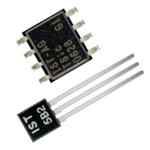 These Digital Temperature Sensors are silicon-based temperature- sensing ICs that provide accurate output through digital representations of the temperatures they are measuring.

For better understanding and more information here is the link from youtube:
- https://www.google.com/search?q=sensors+used+in+automation&tbm=isch&ved=
2ahUKEwjC-L3ZrejoAhUD6ZQKHZt-ABgQ2-cCegQIABAA&oq=sensors+used+in+automation&gs_
lcp=CgNpbWcQAzICCAAyBggAEAUQHjIGCAAQCBAeMgYIABAIEB46BAgAEEM6BAgAEBhQ4
NoMWOKJDWDljw1oAHAAeAGAAcsIiAG_O5IBDTItMi4yLjEuMy40LjGYAQCgAQGqAQtnd3Mtd2l6LWltZw&sclient=
img&ei=eOeVXsLcAoPS0wSb_YHAAQ&bih=657&biw=1366#imgrc=tisH2z9zsL4_PM
↦A Sensor is a device that identifies the progressions in electrical or physical or other quantities and in a way to deliver a yield as an affirmation of progress in the quantity.
Sensors used in Industrial Automation:
In the industrial automation, sensors play a vital part to make the products intellectual and exceptionally automatic.
The following are the various types of sensors used in automation:
- Temperature Sensors
- Pressure sensors
- MEMS Sensors
- Torque Sensors
Temperature Sensors :
A temperature sensor is a device that collects information concerning the temperature from a resource and changes it to a form that can be understood by another device.
Digital Temperature Sensors:
These Digital Temperature Sensors are silicon-based temperature- sensing ICs that provide accurate output through digital representations of the temperatures they are measuring.
Humidity & Temperature Sensors
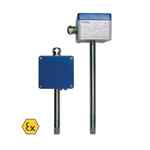
The Temperature & Humidity sensors attribute a temperature & humidity sensor complex with a measured digital signal output. By utilizing the technique and temperature & limited digital-signal-acquisition humidity sensing technology, it ensures high consistency and exceptional long-standing stability.
Applications of Temperature Sensors:
- They are weatherproof & designed for continuous temperature measurement in air, soil, or water
- Exceptional accuracy and stability
- For measurements in complex industrial applications
- For measurements under rough operating conditions
Pressure Sensors:
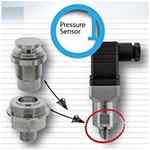
The Pressure Sensor is an Instrument that apprehends pressure and changes it into an electric signal where the quantity depends upon the pressure applied.
Turned parts for Pressure Sensors
These Pressure sensors are widely used in Industrial and hydraulic systems, these are high pressure industrial automation sensors also used in climate control systems.
Vaccum Sensors
Vaccum Sensors are used when the Vaccum pressure is below atmospheric pressure levels and it can be difficult to sense through mechanical methods. These sensors generally depend on a heated wire with electrical resistance correlating to temperature.
Applications of Pressure Sensors:
- Used to measure pressure below than the atmospheric pressure at a given location
- Used in weather instrumentation, aircrafts, vehicles, and any other machinery that has pressure functionality implemented
- Pressure sensors can be used in systems to measure other variables such as fluid/gas flow, speed, water level, and altitude
MEMS Sensors (Micro-electro-mechanical Systems)

These MEMS industrial automation sensors convert measured mechanical signals into electrical signals.
Acceleration sensors
Micro-electro-mechanical Systems (MEMS) Acceleration Sensors are one of the main inertial sensors; and are dynamic sensor competent of have a greater range of sensing capabilities.
Motion sensors
Micro-electro-mechanical system (MEMS) motion sensors use data processing algorithms designed on a motion interaction platform which integrates numerous low-cost MEMS motion sensors with ZigBee wireless technology to carry personified interactions while working together with machines.
Applications of MEMS Sensors:
- These have numerous applications ranging from industry, entertainment, sports to education. For example, triggering airbag deployments or monitoring of nuclear reactors
- Used to measure static acceleration (gravity), tilt of an object, dynamic acceleration in an aircraft, shock to an object in a car, vibration of an object. Cell phones, washing machines or computers
- Used to detect motion
Torque sensors:
The torque sensors complete with essential mechanical stops, raise overload capacity and offer
additional guard during mounting and operation.
additional guard during mounting and operation.
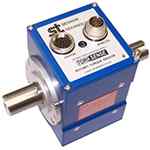
Rotating Torque Sensors
Torque Transducers
These torque transducers utilize superior strain gage technology to indulge
the most challenging necessities for static and dynamic applications of sensors.
the most challenging necessities for static and dynamic applications of sensors.
- Used to Measure the speed of rotation and maintenance necessities
- Used to measure Mass and mass moment of inertia
- The amount of the torque to be calculated, from the point of vision of quasi-static process
- Used to measure the highest speed of rotation, oscillating torque
For better understanding and more information here is the link from youtube:
References:
- https://www.plantautomation-technology.com/articles/types-of-sensors-used-in-industrial-automation
- https://www.google.com/search?q=sensors+used+in+automation&tbm=isch&ved=
2ahUKEwjC-L3ZrejoAhUD6ZQKHZt-ABgQ2-cCegQIABAA&oq=sensors+used+in+automation&gs_
lcp=CgNpbWcQAzICCAAyBggAEAUQHjIGCAAQCBAeMgYIABAIEB46BAgAEEM6BAgAEBhQ4
NoMWOKJDWDljw1oAHAAeAGAAcsIiAG_O5IBDTItMi4yLjEuMy40LjGYAQCgAQGqAQtnd3Mtd2l6LWltZw&sclient=
img&ei=eOeVXsLcAoPS0wSb_YHAAQ&bih=657&biw=1366#imgrc=tisH2z9zsL4_PM
Comments
Post a Comment